

Fixing French Door Locking Mechanism Replacement
When it comes to locking your french doors, you want to ensure they're safe. This can be done by choosing the right lock that will keep your door secure without restricting airflow or affecting the aesthetics of your space.
French door locks typically have three-point locking that has flush bolts on the upper and lower edges of each door panel, and a lockset for the door that can be opened. This lock is extremely difficult to break.
How to fix a French Door that isn't Locking
If your doors don't lock or latch correctly, it could be a major safety issue. This could also be an indication of a serious problem like a damaged locking cylinder. But don't worry about it, the issue is fixable with just a few steps.
The most common reason for the reason a door won't lock is because there is an obstruction that is blocking the latch. This can be something as simple as a small piece of dirt that has gotten stuck in the lock, or it could be an issue with the latch itself.
You can determine whether this is the case by examining the strike plate (the metal piece that is placed against the frame on the side of the door). If you notice a tiny tab of metal protruding out from the strike plate, gently tap it with a screwdriver until it bends it. This will let the bolt slide in more easily.
A latch that has become stuck is usually caused by poor alignment or improper installation. Lubricating the latch can help it function better, but will not fix alignment issues.
If you do not have a strike plate, it is easy to install one. You'll need to take the lock body from the door (the part that screws into the door frame) and replace the complete lock with a new one. This is a straightforward job that requires a Phillips head screwdriver and a power drill.
To make sure that the lock operates as efficiently as possible it is a good practice to lubricate it regularly, particularly the cylinder. Utilize a lubricant made of graphite or silicone to do this. Apply the lubricant on the key and then slowly turn it several times until the cylinder can move freely.
It is a good idea to purchase double-cylinder deadbolts for your French doors, rather than simply a standard deadbolt. A simple handle twist lock will not be enough to keep intruders out and a standard deadbolt that has a thumb-turn on the inside of the door can be defeated by breaking the glass and reaching into the door.
How do you fix an French door that isn't latching
The issue is often caused by the latch of the door not interacting correctly with the hole in the strike plate. This is usually caused by sagging hinges but it could also be a problem with the position of the latch or the latch itself. You can use lipstick, or a similar marker to determine which one is responsible. The location of the mark will help you identify the cause of the issue If, for instance, it contacts below the strike plate's hole, the hinges are the likely reason, however If it's above, the latch's position could be the reason.
It is important to be sure to align the strike plate and latch holes when installing handles or a lock mechanism on a French Door. This is particularly important in the event that one door was closed for a long amount of time. During this period the door may be a bit shifted. This is especially common with timber or composite doors because they are prone to expand or contract according to the weather and the surrounding.
To correct this issue, first remove the latch from the active door's edge, then remove the locking strip from the handle. Utilizing a sharp chisel hammer and a chisel, expand the strike plate hole within the door frame. This will permit the latch to be placed in a more suitable position for the door, and when the door is shut and opened it will close easily without catching or rubbing on the frame.
Once the hole for the latch has been expanded, insert the new latch on the strike plate and screw it in. Then adjust the strike plate with the hammer, screw and nut until it is in the correct position. Test the door. Make any necessary adjustments.
Another common problem with external French Doors is that the lock cylinder won't turn. This could be caused by dirt or wear and tear, however it's usually simple to resolve. Most of the time, the lock is blocked, or the pins in the cylinder are worn. A simple cleaning can make a huge difference to the operation of the mechanism, and it's definitely worth giving this a try. If the issue continues it could be necessary to replace the lock cylinder.
How to fix an French door that won't open
If your French doors aren't locking the way you want them to, it's most likely caused by debris and dirt blocking the mechanism of the lock. The first thing you need to take is to ensure that the frame of the door is free from obstructions and nothing is blocking the mechanism for locking. There could be french door repairs near me repairmywindowsanddoors.co.uk with the alignment of the French door and its frame. This could cause the French door to drag against the frame, resulting in jamming.
The lock mechanism is simple. A key rotates the spindle, and then moves the bolt upwards and downwards on a rail. If the handle spins but the bolt doesn't move it means that something is stuck. There may be a problem with the mechanics of the lock itself or it could just need lubricating. Use a silicone spray. It will come with a nozzle that can be used to direct lubricant directly into the mechanisms. Spray generously, then turn the handle to ensure that all the parts of the lock mechanism are well-lubricated.
You may also have to adjust the position of the latch on the French door. It is typically possible to do this from outside. If you're French doors are brand new and brand new, you'll be capable of screwing the latch and handle in place without difficulty. If they are old you'll be required to mark the positions of the holes for the handles on the door and the latch on the frame of the door using a template included in the lock kit. The hole to install the handle or knob at the proper height. It is typically about 36 inches above the floor. Then, you can drill a smaller hole on the outside of the door to install the latch.
After the hole has been drilled It is crucial to check that the latch plate is properly placed over the strike plate on the door frame. If it doesn't the deadbolt, it may not retract into the strike plate when you pull the lever for locking. The latch plate will need to be screwed into place.
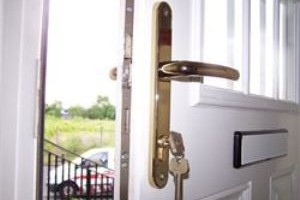
How to fix a French door that won't close
The latch on a French door can become stuck and can't be closed. This makes the doors inoperable. This is usually a simple issue to resolve, but it may require you to remove one of the heavy doors. In most cases, the latch is not aligned correctly with the strike plate, the jamb of the door, or both. The dead bolt might not be fully extended or retracted. Misalignment can occur in the course of time due to weather or the settling.
It can be difficult to open doors that are stuck. To fix this you need to loosen the screws that hold the hinge to the frame, and then add some shims to make the door raised or lowered. This will allow the latch to be closer to the lock mechanism, and resolve the issue.
If the latch does not fit inside the strike plate hole, you can solve the issue by loosening the screw holding the strike plate and using an electric or metal file to cut off some of the edge until the latch is able to fit. If you need to, you might also have to remove the strike plate in order to chisel out the hole.
Another common problem with French doors is that the locks don't engage correctly. This could indicate a problem in the cylinder that locks if you're using a newer lock system. It is necessary to remove the lock and examine it for obvious obstructions or damage and if it's not functioning properly, you may need to replace it.
Replace the weatherstripping that was installed on the exterior of an older door when you feel a draft coming in. This will create a secure seal and to keep the doors from sticking or locking improperly. You can also install door sweeps to ensure that all of the possible gaps are closed. If you do this, make sure that the sweeps are placed on both sides of the door and ensure that the sweeps overlap at the bottom.